
Pick a shape, then enter your dimensions and depth. Get cubic yards, tons, the number of 50-lb bags you need, and a real cost estimate in seconds. Built for homeowners, landscapers, and contractors.
Area: 100.00 sq ft. Density defaults to 100 lb per cubic foot for dry, loose pea gravel. Change it if your supplier quotes a different weight per yard.
Tip: For a long path use the coverage calculator. For a patio with a base layer, use the patio calculator. For tonnage only, use the weight calculator.
Different projects need different calculations. Each calculator below is focused on one specific job type.
How much does X cubic yards cover at a given depth? Works backwards from volume.
By WeightConvert volume to pounds, tons, kilograms and metric tonnes for truck orders.
By BudgetEnter a per-ton or per-yard supplier price and get the full delivered cost estimate.
By BagsBuying from a hardware store? Get the exact number of 50-lb bags your project needs.
By VolumeConvert length, width and depth to cubic yards, cubic feet, and cubic meters.
ProjectIncludes the recommended 4-inch depth and 15% compaction factor for driveways.
ProjectSupports rectangular and circular patios with 3-inch depth as default.
ConverterConvert any material. Gravel, sand, topsoil, mulch. Returns short tons, metric tonnes, and pounds. Works both ways.
ConverterConvert any area and depth to cubic yards instantly. Rectangle, circle, triangle shapes. Reverse conversion included.
DrainageGravel, pipe length, fabric area, and slope fall for French drain projects. Pipe displacement formula included.
SafetyCPSC-compliant depth by equipment height, use zone sizing, cubic yards, tons, and cost.
The calculation behind any pea gravel estimate uses three measurements, length, width, and depth, multiplied together to get volume, then converted to the units your supplier uses. The core formula:
For a 10×12 ft patio at 2-inch depth: 10 × 12 × (2÷12) = 20 ft³ = 0.74 yd³ = 1.0 ton = 40 bags. At 3 inches that becomes 30 ft³ = 1.11 yd³ = 1.5 tons = 60 bags. Depth is the variable that changes the order most. Always confirm it before calling your supplier.
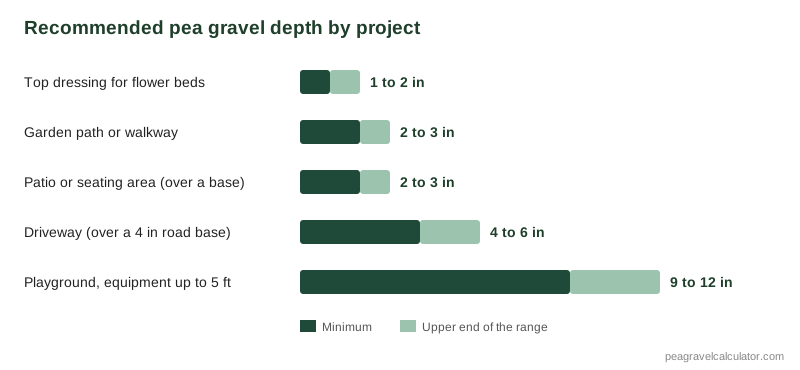
Verified against NRMCA aggregate guidelines and ASTM C33 standards.
| Project Type | Recommended Depth | Notes |
|---|---|---|
| Top-dressing flower beds | 1–2 inches | Suppresses weeds; doesn't smother plant crowns |
| Garden paths and walkways | 2–3 inches | Comfortable to walk on; stays in place with edging |
| Patios and seating areas | 2–3 inches over base | Drains well; furniture sits stably at 2.5 in max |
| Residential driveways | 4–6 inches over road base | Must have 4-inch compacted base layer underneath |
| French drains | Full trench depth | Rounded shape moves water efficiently through voids |
| Playground surfacing | 9–12 inches | CPSC handbook: 9 in minimum maintained depth for equipment up to 5 ft |
All figures at 2-inch depth, including 10% waste factor.
| Project | Area | Cubic Yards | Tons | 50-lb Bags |
|---|---|---|---|---|
| Small garden path (10×3 ft) | 30 sq ft | 0.19 yd³ | 0.25 tons | 11 bags |
| 10×10 ft patio | 100 sq ft | 0.62 yd³ | 0.83 tons | 34 bags |
| 12×14 ft dining patio | 168 sq ft | 1.04 yd³ | 1.40 tons | 56 bags |
| Single-car driveway (12×40 ft)* | 480 sq ft | 7.41 yd³ | 10.0 tons | - |
| Two-car driveway (20×40 ft)* | 800 sq ft | 12.3 yd³ | 16.6 tons | - |
* Driveway figures at 4-inch depth with 25% combined waste and compaction factor.
Bulk pea gravel from a landscape supplier costs $25 to $55 per ton, or roughly $30 to $80 per cubic yard, depending on region and order size. Bagged pea gravel from a hardware store costs $4 to $8 per 0.5 cubic foot bag, which works out to $240 to $480 per ton, three to ten times the bulk price.
| Project Size | Bags Needed | Bag Cost | Bulk Cost | Cheaper Option |
|---|---|---|---|---|
| Under 0.5 yd³ (small bed, border) | 1–27 | $4–$162 | Often has a delivery minimum | Bags |
| 0.5–2 yd³ (small path, garden bed) | 27–108 | $162–$648 | $30–$160 | Bulk |
| Over 2 yd³ (patio, driveway) | 108+ | $648+ | $60+ | Bulk, by a wide margin |
The crossover point is around 0.5 cubic yards. Below that, many suppliers won't deliver a small bulk order at all, so bags win by default. Above it, bulk pricing wins even after accounting for a delivery fee, which typically runs $50 to $150 depending on distance from the supplier.
With the waste allowance set to "None", the number this calculator returns is the theoretical volume for a perfectly flat, perfectly filled space. Real installations lose material to three things: compaction (loose gravel settles under its own weight and foot traffic, reducing depth by 5 to 10 percent within the first month), spillage during spreading and wheelbarrow transport, and uneven subgrade that eats extra material in low spots. Ordering exactly the calculated amount usually leaves a visibly thin patch somewhere. Use the waste allowance menu to add 10 percent for patios and paths, and up to 15 percent for driveways, where vehicle compaction is more aggressive.
The calculator above handles rectangles, circles, and triangles through the shape menu. Here is the math behind each, plus the method for irregular areas:
Origin, characteristics, and why landscapers prefer it for paths and drainage.
ReferenceFrom 1/8" to 3/8". Which size fits which job, with pros and cons per application.
DIYStep-by-step: base prep, edging, fabric, depth, and finishing for weekend DIY.
PricingWhat you'll actually pay per ton, per yard, and per bag. Including delivery fees.
ComparePea gravel vs crushed stone, river rock, and decomposed granite. When each wins.
Inspiration12 ways to use pea gravel in your yard. Patios, paths, dry creeks and more.
StyleTan, gray, white, black. Every color explained by mineral origin with pairing guidance.
MaintenanceAnnual top-up schedule, weed control, leaf removal, and when to re-lay from scratch.
How-ToBase stone, fabric, and why sand is the wrong choice.
How-ToEdging types, height, cost per foot, and installation.
ProjectJoint width, stone size, and how much to buy.
BuyingFees, truck sizes, minimum loads, and site prep.
GuideCost, depth, base spec, installation steps, slope limits, edging, and snow removal for pea gravel driveways.
PricingRegional prices for all 50 states. Per ton, per yard, delivery fees, and project cost estimates.
ReferenceMinimum vs optimal depth for every application, from flower beds to French drains.
HonestNine genuine advantages and eight real limitations, with real numbers and specific scenarios.
Quick AnswerPre-calculated quantities for every common project size at standard depths.
ProjectCost, depth, base spec, edging, weed barrier, and step-by-step DIY installation.
ProjectWidth by use type, depth by traffic, curved path techniques, and edging options.
ProjectDepth, drainage slope, keeping gravel out of the pool, and heat comparison.
SafetyCritical safety rules, correct depth, and surround sizing by seating capacity.
ProjectDepth by breed size, drainage, odor control, and material comparison.
DrainageDoes pea gravel drain well? Permeability rate and the clay subsoil limitation explained.
How-To7 proven methods to stop migration. Edging depth, stabilizer resin, and base prep.
MaintenanceTwo weed sources explained, fabric types compared, and pre-emergent timing.
Compare5-year cost comparison, soil chemistry, and project-by-project verdicts.
CompareCost, drainage, stability, and freeze-thaw climate performance compared.
StyleMineral types, heat reflectivity, yellowing prevention, and design rules.

Density used: 100 lb per cubic foot (1.35 short tons per cubic yard) for dry, loose 3/8-inch pea gravel. Source: USGS Construction Sand and Gravel Statistics.
Depth standards: NRMCA aggregate specifications for residential landscaping applications. Driveway standards: NACE gravel road specifications and USDA NRCS Conservation Practice Standard 560.
Verified against:
Last reviewed: October 6, 2026 · Full methodology