
White Pea Gravel: Types, Uses, Maintenance & Cost 2026
In This Guide
- White pea gravel types, mineral origins
- Heat reflectivity, why white stays cool
- Design guide, where white gravel works
- Why white gravel yellows, and how to prevent it
- Using white gravel around plants
- Cleaning and maintenance
- White pea gravel vs white marble chips
- How much white pea gravel do I need?
- Cost guide 2026
- Where to buy
- Frequently asked questions
White Pea Gravel Types: Mineral Origins
The whiteness of pea gravel comes from the mineral composition of the source rock. White gravel is not painted, bleached, or artificially colored. The color is the natural tone of the stone. Different white stones have different brightness levels, surface textures, and long-term color stability.
| Type | Mineral source | Color | Longevity | Best use |
|---|---|---|---|---|
| White quartz pea gravel | Quartz (SiO₂) | Bright white, consistent | Excellent; chemically inert | Zen gardens, pool surrounds, modern gardens |
| White marble chips | Metamorphic limestone (calcite) | Bright white to ivory | Good; gradual calcite weathering | Formal gardens, borders, feature areas |
| White limestone pea gravel | Calcium carbonate (CaCO₃) | Cream to ivory | Moderate; dissolves slowly in acid rain | Mediterranean gardens, budget projects |
| White quartzite | Metamorphic quartz | Bright white to pale gray | Excellent; extremely hard | Any application requiring lasting whiteness |
White quartz pea gravel is the best choice for lasting whiteness. Quartz is chemically inert. It does not react with acid rain, does not leach minerals, and does not yellow from iron or calcium deposits. Its surface is glassy-smooth and reflects light with a bright even tone.
White limestone is a good budget option but has one limitation: calcium carbonate slowly dissolves in acidic conditions. In regions with acid rain or where acidic mulch or fertilizer is used nearby, white limestone gravel gradually pits and roughens, which affects both appearance and drainage. The rough surface of weathered limestone also captures organic debris and algae more readily than the smooth surface of quartz.
White marble chips are angular rather than rounded. They are crushed and sorted, not water-tumbled. The angular surface creates a different visual texture than pea gravel: more crystalline and light-catching, with a distinctly formal quality. They are used in similar applications but produce a more structured appearance.
Heat Reflectivity: Why White Stays Cool
White surfaces reflect solar radiation rather than absorbing it. This has real practical consequences for white pea gravel installations that most guides do not address.
| Surface color | Solar reflectance (albedo) | Surface temp in direct summer sun |
|---|---|---|
| White pea gravel / white quartz | 70–80% | 90–110°F |
| Light gray / tan pea gravel | 30–50% | 100–130°F |
| Standard mixed pea gravel | 25–40% | 110–140°F |
| Dark pea gravel / black stone | 5–15% | 130–160°F |
| Concrete (light gray) | 25–35% | 130–160°F |
| Asphalt | 4–12% | 150–180°F |
The 30 to 50°F surface temperature difference between white and dark gravel in summer is significant for barefoot use. White pea gravel around a pool, in a children's play area, or on a patio used in bare feet remains comfortable when dark gravel would be painful. This is the primary practical reason to choose white gravel over dark stone in hot climates or south-facing areas.
The flip side: white gravel's reflected radiation heats adjacent walls, fences, and plants rather than the ground itself. A large white gravel area immediately south of a wall reflects heat back onto that wall. This can be beneficial (warming a wall for heat-loving plants trained against it) or a problem (increased air conditioning load for adjacent rooms, leaf scorch on nearby low-growing plants). Factor this in when siting a large white gravel area near structures or sensitive plantings.
Design Guide: Where White Gravel Works
White pea gravel is a design-specific choice. It transforms a garden space visually more than any other gravel color. Which means it has more design requirements to use well.
Garden styles where white gravel works:
Japanese zen gardens. The most traditional application. White or light-colored raked gravel represents water in Japanese garden design. The raked patterns suggest currents and waves. The formal geometry requires a consistent, clean surface that white quartz delivers. Surrounding moss, dark stone, and green plantings create the contrast ratio that makes the design work.
Mediterranean and drought-tolerant gardens. White gravel around lavender, rosemary, santolina, cistus, and ornamental grasses creates the sun-baked southern European aesthetic. The reflective surface suits these plants' preference for warm, dry root zones and the color combination, gray-green foliage, white stone, dark edging, is visually coherent.
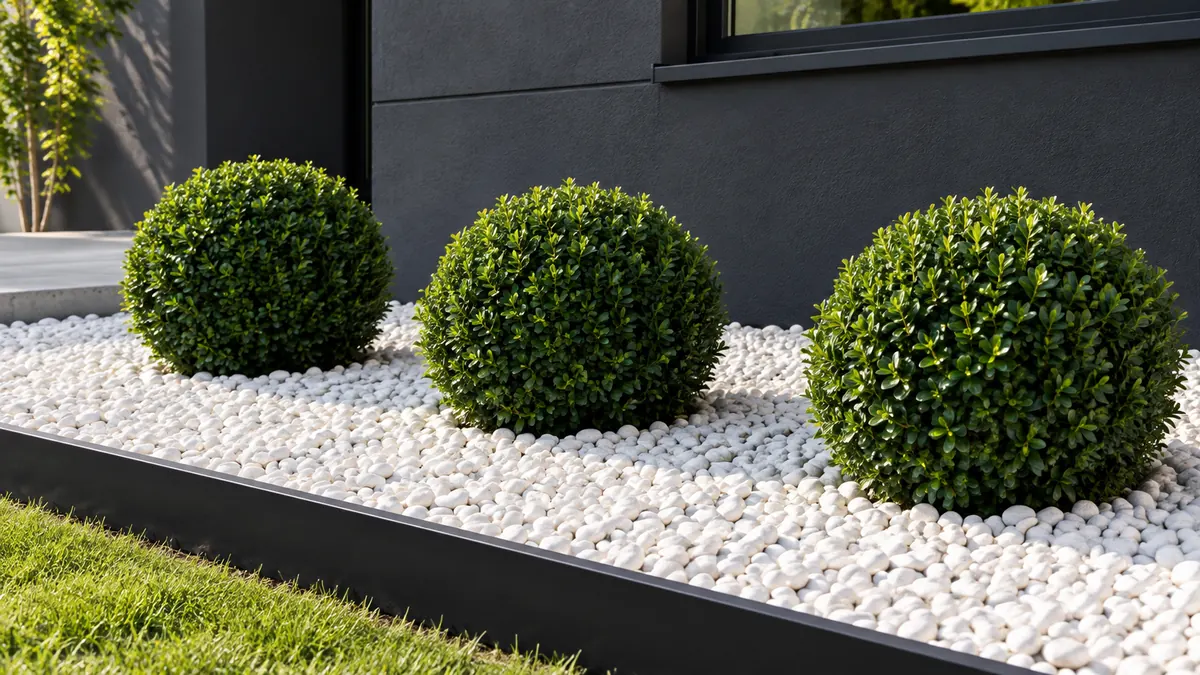
Modern minimalist gardens. White gravel against dark pavers, Corten steel edging, or black steel planting beds creates the high-contrast graphic quality that suits contemporary garden design. The white surface reads as a strong design element rather than a background material.
Formal geometric gardens. White gravel panels within a box hedge parterre, or white gravel paths between formal hedging, has a centuries-old precedent in European garden design. The light surface is legible from above and creates visual definition between planted areas.
Garden styles where white gravel fails:
Naturalistic gardens. White gravel looks stark against soft informal planting. The clean bright surface conflicts with the deliberate randomness of naturalistic design. Natural tan, brown, or mixed-color gravel reads as organic. White reads as manufactured.
Woodland gardens. Under tree canopy, white gravel rapidly develops algae and moss growth, turning gray-green. The constant leaf drop means continuous maintenance to keep the surface clean. Natural brown or bark-chip mulch is the correct material for woodland settings.
Adjacent to grass lawns. White gravel seen against a bright green lawn creates an unnatural contrast. The two colors compete visually rather than complementing each other. A transition planting, low hedge, or dark edging strip between the lawn and white gravel reduces this.
Why White Gravel Yellows: And How to Prevent It
Yellowing is the most common complaint about white pea gravel, and it has specific causes that are preventable.
Cause 1. Iron oxide deposits. Iron-rich water. From high-iron tap water, from iron-rich soil that reaches the surface during rain splash, or from rusting metal edging. Deposits rust-colored iron oxide on the stone surface over time. The gravel develops a yellow-orange tinge that deepens annually. Prevention: use stainless steel or aluminum edging (not mild steel that rusts), install a base layer that prevents soil splash-up, and if irrigation water is iron-rich, filter it or use a drip system that applies water directly to soil rather than across the gravel surface.
Cause 2. Algae and biofilm. In shaded or moist conditions, green-yellow algae colonizes the stone surface, creating a yellow-green tinge. Prevention: ensure adequate drainage so the surface dries within hours of rain, avoid shaded locations for large white gravel areas, and apply a dilute bleach solution annually as a preventive treatment even before significant discoloration is visible.
Cause 3. Calcium carbonate leaching (limestone only). White limestone gravel gradually weathers and the surface develops a cream-yellow patina as calcium carbonate reacts with atmospheric moisture. This is not cleanable. It is the stone itself changing over time. Prevention: choose white quartz or white quartzite gravel instead of white limestone if long-term whiteness matters.
Using White Gravel Around Plants
White gravel's reflectivity affects the microclimate around plants differently from darker gravel. Used correctly it benefits the right plants significantly. Used in the wrong conditions it causes stress.
Plants that benefit from white gravel: Mediterranean herbs and shrubs (lavender, rosemary, thyme, cistus, echium), ornamental grasses in dry conditions, succulents and agaves, alpine plants that require sharp drainage and warm root zones, and Mediterranean-climate shrubs that originate in rocky white limestone terrain. These plants evolved in conditions where white limestone reflectivity is normal. The additional heat around their root zones from the reflected radiation mirrors their native environment.
Plants that are stressed by white gravel: Woodland plants and shade-tolerant species, anything preferring cool moist root conditions, hostas and ferns, most vegetables, and shallow-rooted annuals. The increased radiant heat and reduced moisture around the plant base causes stress in these species regardless of watering.
Practical rule: Keep white gravel 3 to 4 inches from any plant stem or crown. Gravel directly against plant stems traps moisture and heat against the bark, encouraging fungal disease regardless of gravel color. This gap also prevents gravel from contaminating the soil directly around the root zone, which makes top-up applications easier.
Cleaning and Maintenance
| Issue | Cause | Treatment | Frequency |
|---|---|---|---|
| Surface dust and dirt | Normal weathering | Thorough hosing down | As needed / after dry periods |
| Algae and moss | Shade and moisture | 1:10 bleach solution, 30 min, rinse | Annually or when visible |
| Iron/rust staining | Iron-rich water or soil | Oxalic acid or iron stain remover | Annually |
| Leaf tannin staining | Decomposing leaves | 1:10 bleach solution, rinse | After autumn leaf fall |
| Green-yellow tinge | Biofilm | Bleach solution + stiff brush | Twice yearly in moist conditions |
| Depth loss | Migration and settling | Top up with 1 inch fresh white gravel | Every 2–3 years |
The critical maintenance rule for white gravel: remove leaves before they decompose. Decomposing leaves release tannins and create a layer of organic matter that turns white gravel gray-brown and harbors weed seeds. A leaf blower (low setting) is the quickest tool for clearing leaves from gravel. More effective than raking which disturbs the gravel surface. Raking is appropriate for redistributing displaced gravel, not for leaf removal.
White Pea Gravel vs White Marble Chips
| Factor | White pea gravel | White marble chips |
|---|---|---|
| Shape | Rounded, water-tumbled | Angular, crushed |
| Comfort underfoot | Very comfortable | Moderate; angular edges |
| Visual texture | Smooth, uniform | Crystalline, light-catching |
| Formal appearance | Moderate | High |
| Cost per cubic yard | $45–$80 | $55–$95 |
| Long-term whiteness | Good (quartz) | Good; gradual ivory patina |
| Drainage | Excellent | Good |
| Best garden style | Zen, Mediterranean, modern | Formal, classical, contemporary |
How Much White Pea Gravel Do I Need?
White pea gravel uses the same calculation as standard pea gravel. Same density, same formula. Length (ft) × Width (ft) × Depth (in) ÷ 324 = Cubic yards. Add 10 percent. Multiply by 1.35 for tons.
| Area | At 2 inches | At 3 inches | 50-lb bags (3 in) |
|---|---|---|---|
| 10 × 10 ft | 0.68 yd³ | 1.02 yd³ | 55 bags |
| 20 × 10 ft | 1.36 yd³ | 2.04 yd³ | 110 bags |
| 20 × 20 ft | 2.72 yd³ | 4.07 yd³ | 220 bags |
| 3 ft × 30 ft path | 0.61 yd³ | 0.92 yd³ | 50 bags |
Use the pea gravel calculator for any dimensions. White pea gravel follows the same depth and installation specifications as standard pea gravel. Use 3 inches over a 2-inch compacted base with landscape fabric between. The only difference is the color; all other installation requirements are identical.
Cost Guide 2026
| Type | Bulk per cubic yard | Per ton | 50-lb bag retail |
|---|---|---|---|
| White quartz pea gravel | $45–$80 | $33–$59 | $8–$15 |
| White marble chips | $55–$95 | $42–$73 | $10–$18 |
| White limestone pea gravel | $40–$70 | $30–$52 | $7–$13 |
| White quartzite | $50–$85 | $37–$63 | $9–$16 |
| Standard tan/gray pea gravel (comparison) | $30–$55 | $22–$41 | $5–$9 |
| Delivery fee | $50–$150 per load regardless of quantity | ||
White pea gravel costs $15 to $30 per cubic yard more than standard tan or gray pea gravel. For a 200 sq ft area at 3 inches depth (2.04 yd³), the premium over standard gravel is approximately $30 to $60 in bulk material. This is a modest premium for a material that significantly changes the visual character of a garden space. Whether the premium is worthwhile depends entirely on whether white gravel is appropriate for the design. Using it in the wrong garden style wastes the premium cost and produces a result that looks worse than standard colored gravel.
Where to Buy White Pea Gravel
White pea gravel is more widely available than it was five years ago but is still not universally stocked. The best sources by project size:
For projects over 1 cubic yard: Landscape supply yards and aggregate suppliers. Call ahead to confirm white quartz or white marble stock. Availability varies regionally. Most suppliers stock standard tan pea gravel in volume and only carry white on order or in limited quantity. Some regions have abundant white quartz sources (Southeast, parts of the Midwest) while others depend on quarried stock from distant sources.
For projects under 1 cubic yard: Home improvement stores (Home Depot, Lowe's) stock white marble chips and white pea gravel in 50-lb bags year-round. The bagged product is significantly more expensive per cubic yard equivalent but avoids delivery minimums. Online retailers offer bagged white pea gravel with home delivery. Useful for smaller projects or for sourcing specific types not available locally.
Worked White Pea Gravel Project Examples
Modern Japanese garden, 15 x 20 ft, white quartz pea gravel. White quartz at $60/yd³. Area at 3 inches: 3.06 yd³ = $184. Dark steel edging (70 lin ft) = $105. Woven fabric = $54. Two specimen moss rocks = $120. Total materials: $463. Installation time: 6 to 8 hours for two people. The white surface and dark edging create the high-contrast graphic quality that defines contemporary Japanese garden design. White quartz is the correct material here. White limestone would yellow within 3 to 4 seasons from iron deposits in UK and northern US water supplies.
Pool surround, 16 x 32 ft pool, 3-foot white gravel border. White pea gravel stays 15 to 25°F cooler than tan pea gravel in afternoon sun due to its higher solar reflectance. For a pool surround used barefoot in a hot climate, this temperature difference is genuinely significant. Budget: white quartz pea gravel 1.87 yd³ at $65/yd³ = $122 vs standard tan pea gravel at $40/yd³ = $75. Premium for white: $47 on a 3-foot wide pool surround. This is an extremely small cost for a surface that is meaningfully cooler underfoot during the hottest hours of pool season.
4 White Pea Gravel Mistakes
Mistake 1. Using white limestone instead of white quartz where yellowing is a concern. White limestone and white quartz look very similar when newly installed. Over 3 to 5 years in areas with iron-rich water or acid rain, white limestone develops a yellow-orange surface stain from iron oxide deposition and calcite weathering. White quartz is chemically inert and maintains its brightness indefinitely under the same conditions. The price difference is $10 to $20 per cubic yard. Almost always worth paying for any permanent installation where white color is the design intent.
Mistake 2. Installing white pea gravel in a shaded area. In shade with limited sunlight, white gravel becomes a growth medium for algae within one to two seasons. The surface turns gray-green and requires annual bleach treatment to restore. White gravel requires full sun to stay clean with minimal maintenance. In any location that receives less than 6 hours of direct sunlight daily, use gray or tan pea gravel. Or commit to annual cleaning as part of the maintenance plan.
Mistake 3. Not using metal edging with white gravel adjacent to lawn. Grass clippings and soil from adjacent lawn, blown onto white pea gravel during mowing, create persistent brown staining on the surface that hosing alone does not fully remove. A raised steel edging lip 0.5 inch above the gravel surface provides a physical barrier that intercepts most lawn debris before it reaches the white stone. Standard flush edging does not provide this protection.
Mistake 4. Placing white gravel directly against rusting mild steel edging. Iron rust from corroding mild steel edging washes onto adjacent white pea gravel with each rain event, creating orange-brown staining along the border. This staining is difficult to remove and returns within weeks. Use aluminum or stainless steel edging with white pea gravel. Both are rust-free. The premium over mild steel is $0.50 to $1.00 per linear foot. On a 60-foot garden border that is $30 to $60 to avoid a permanent staining problem.
Frequently Asked Questions
What is white pea gravel?
Does white pea gravel get dirty and stay dirty?
Why does white gravel turn yellow?
Is white pea gravel good for gardens?
How much does white pea gravel cost?
What are the different types of white gravel?
Does white pea gravel get hot in summer?
How do you clean white pea gravel?
Can you use white pea gravel around plants?
How is white pea gravel different from white marble chips?
How do I calculate how much white pea gravel I need?
Where can you buy white pea gravel?
Related Guides and Calculators
Pea Gravel Calculator
Calculate cubic yards, tons, and bags for any white pea gravel project. Same formula, same density as standard gravel.
GuidePea Gravel Colors & Types
All pea gravel colors explained by mineral origin. White, gray, tan, brown, and mixed blends.
GuidePea Gravel Patio Guide
Complete patio installation guide. Depth, base spec, edging, and maintenance for any pea gravel color.
Maintenance Guide
Annual top-up schedule, weed control, cleaning, and seasonal care. Especially relevant for white gravel.
CalculatorCoverage Calculator
Enter cubic yards and depth. How much area your white pea gravel quantity will cover.
GuidePea Gravel Cost Guide 2026
Full cost breakdown including bulk vs bag comparison and regional pricing variation across the US.
Sources & Methodology
- USGS: Natural Aggregates Statistics: aggregate mineral composition and density reference
Solar reflectance (albedo) values: From materials science research on surface reflectance of common construction and landscaping materials. Temperature figures represent typical measured surface temperatures under direct summer sun conditions. Mineral composition data from geological reference. Cost data from 2026 landscape supplier pricing. Full methodology
Last reviewed: October 2026