
Pea Gravel Between Pavers: Joint Width, Stone Size and Quantity
- When Pea Gravel Between Pavers Works
- Which Size of Pea Gravel to Use
- How Much Pea Gravel You Need for Paver Joints
- How to Install Pea Gravel Between Pavers
- Stepping Stones Set in a Pea Gravel Bed
- Pea Gravel vs Polymeric Sand vs Other Joint Fillers
- Common Problems and How to Avoid Them
- Maintenance
- Frequently asked questions
When Pea Gravel Between Pavers Works
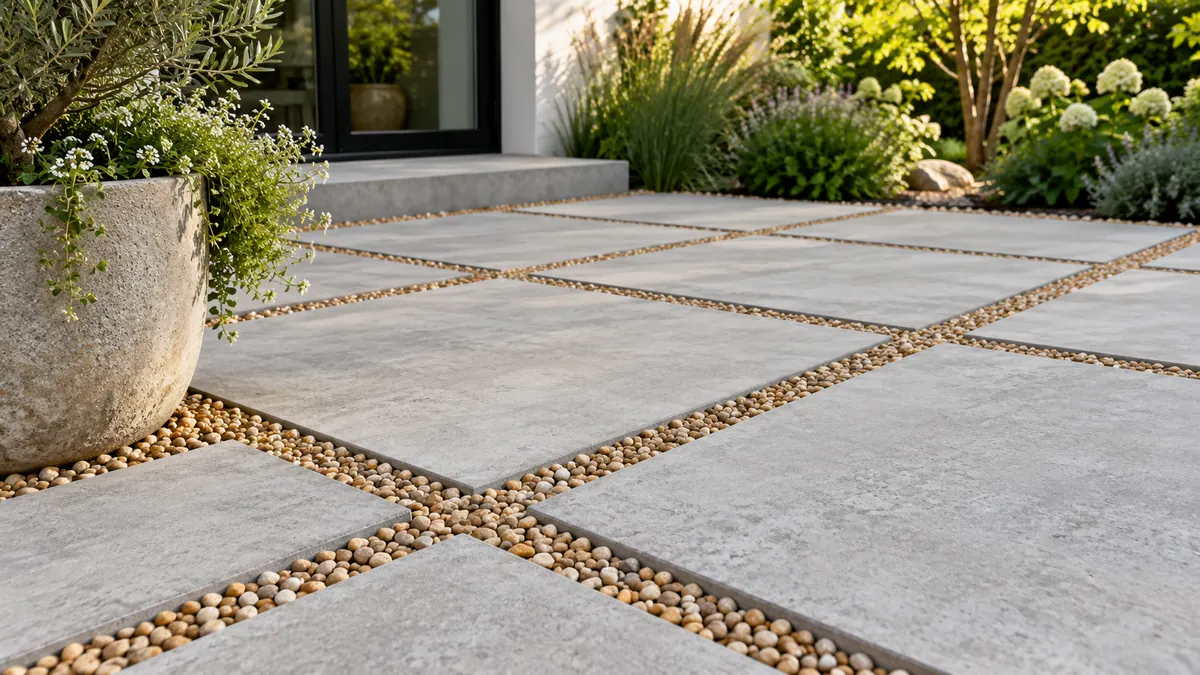
Pea gravel is a good joint filler for large-format pavers, flagstone, and stepping stones laid with deliberate gaps. It drains freely, it is cheap, and it can be topped up or replaced with a rake and a bucket. It is the wrong choice for standard brick-size pavers laid tight together, where the joint is only 1/8 to 1/4 inch wide.
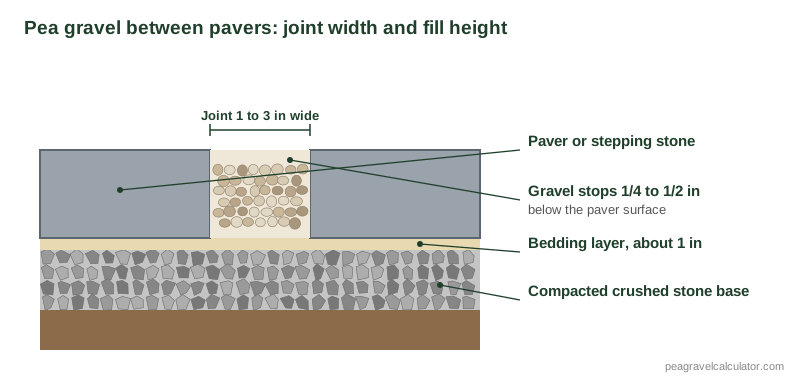
The deciding factor is the ratio of stone size to joint width. A joint needs to be at least three stone widths across for the stones to nest and stay put. Below that ratio the stones sit on top of the gap, roll onto the paver surface, and get kicked out within weeks.
| Joint width | Best filler | Why |
|---|---|---|
| Under 1/2 inch | Polymeric sand or jointing sand | Pea gravel cannot enter the joint |
| 1/2 to 1 inch | 1/8-inch pea gravel or stone chips | Only the finest grade will nest |
| 1 to 2 inches | 1/4-inch pea gravel | Three or more stones fit across the joint |
| 2 to 4 inches | 3/8-inch pea gravel | Standard grade, widely stocked, easiest to buy |
| Over 4 inches | 3/8-inch pea gravel with edging | Treat it as a gravel strip, not a joint |
Which Size of Pea Gravel to Use
Most suppliers stock 3/8-inch pea gravel as the default. It suits joints of 2 inches and wider. For narrower joints, ask for 1/4-inch stone, which some yards sell as "small pea gravel" or "#8 pea". The pea gravel sizes guide lists the trade names each size is sold under.
Smaller stone is more comfortable for bare feet and less likely to catch a chair leg. Larger stone resists being washed out by heavy rain and is less likely to be picked up by a leaf blower. If the patio is used mostly for dining furniture, lean toward the smaller size and a slightly lower fill height.
One limit to be honest about: pea gravel is rounded, so the stones never lock together. If you want a joint that feels firm underfoot, angular 1/4-inch crushed stone chips hold better than pea gravel. They look sharper and less natural, so the choice is between appearance and stability.
How Much Pea Gravel You Need for Paver Joints
Joint volume is small compared with a full gravel surface, so the usual area calculation overestimates badly. Work it out in three steps.
- Find the joint share of the area. For square pavers, joint share = 1 minus (paver width ÷ (paver width + joint width))².
- Multiply total area by the joint share to get the square feet of joint.
- Multiply by fill depth in feet to get cubic feet. Fill depth is paver thickness minus the 1/4 to 1/2 inch you leave empty at the top.
| Paver size | Joint width | Joint share of total area |
|---|---|---|
| 12 × 12 in | 1 in | 14.8% |
| 12 × 12 in | 2 in | 26.5% |
| 18 × 18 in | 2 in | 19.0% |
| 24 × 24 in | 2 in | 14.8% |
| 24 × 24 in | 3 in | 21.0% |
| 24 × 36 in | 3 in | 17.9% |
Worked example. A 10 × 12 ft patio (120 sq ft) uses 24 × 24 inch pavers, 2 inches thick, with 2-inch joints. Joint share is 14.8 percent, so the joints cover 120 × 0.148 = 17.8 sq ft. Fill depth is 1.5 inches, or 0.125 ft. Volume is 17.8 × 0.125 = 2.2 cubic feet. At 100 lb per cubic foot that is about 222 lb. Add 10 percent for spillage and you need roughly 245 lb, which is five 50-lb bags.
That is a bag purchase, not a bulk delivery. Once you have the joint square footage, the bag calculator will convert it for any depth. Enter the joint area as the length with a width of 1 foot.
How to Install Pea Gravel Between Pavers
- Set the pavers first. The pavers need their own compacted base and bedding layer. Gravel in the joints does not hold pavers in place. See what to put under pea gravel for base depths.
- Check joint depth. Scrape out soil, sand, or debris so the joint is open for most of the paver thickness. A joint filled with soil underneath will grow weeds through the gravel.
- Line wide joints. For joints over 2 inches, lay a strip of woven landscape fabric in the bottom of the joint. It keeps the gravel from working down into the bedding layer.
- Pour and sweep. Tip gravel onto the pavers and sweep it into the joints with a stiff push broom, working diagonally across the joint lines.
- Settle with water. Hose the surface lightly. The stones drop and pack. Top up any joint that sinks.
- Set the final height. Brush out the excess until the gravel sits 1/4 to 1/2 inch below the paver surface.
- Contain the outer edge. The outside joints need edging, or the perimeter gravel migrates into the lawn.
Stepping Stones Set in a Pea Gravel Bed
A different layout uses the same materials: stepping stones or large pavers placed in a continuous field of pea gravel, with gaps of 4 inches or more. Here the gravel is the surface and the stones are the islands, so the quantity is calculated the normal way and then reduced by the area the stones cover.
For example, a 3 × 20 ft path (60 sq ft) with ten 18 × 18 inch stepping stones has 22.5 sq ft of stone and 37.5 sq ft of gravel. At 2 inches deep that is 37.5 × 2 ÷ 12 = 6.25 cubic feet, or about 0.23 cubic yards. Set each stone so its top is 1/2 inch above the gravel. The walkway guide covers spacing for a natural stride.
Pea Gravel vs Polymeric Sand vs Other Joint Fillers
| Filler | Best joint width | Drains | Stays put | Weed resistance | Upkeep |
|---|---|---|---|---|---|
| Pea gravel | 1 in and wider | Very well | Fair, needs top-ups | Fair | Rake and top up yearly |
| Polymeric sand | 1/8 to 1 in (check the bag) | Poorly once cured | Very good | Good | Redo when it cracks |
| Regular jointing sand | 1/8 to 1/2 in | Well | Poor, washes out | Poor | Re-sweep often |
| Crushed stone chips | 1/2 in and wider | Very well | Good, angular stones lock | Fair | Occasional top-up |
| Ground cover plants | 2 in and wider | Well | Good once rooted | Good once dense | Water and trim |
Polymeric sand products each state a maximum joint width on the bag. Many standard products top out near 1 inch, and wide-joint versions go further. Pea gravel takes over where those limits end.
Common Problems and How to Avoid Them
- Gravel on top of the pavers. The joints were filled flush. Lower the fill by 1/4 to 1/2 inch.
- Weeds in the joints. Seeds germinate in the dust that collects between stones, even over fabric. Rinse or blow out debris each season. The weed control guide covers treatment options.
- Joints sinking. The gravel is working into sand below. Add a fabric strip and top up.
- Snow removal scatters stones. Set a snow blower's skid shoes high, or use a plastic shovel and leave a thin layer of snow.
- Wobbly furniture. Chair legs find the joints. Use smaller stone, narrower joints in the dining zone, or furniture glides.
Maintenance
Expect to add a small amount of gravel once a year, more in the first season as the joints settle. Keep a spare bag from the original batch, because color varies between quarries and even between loads. Sweep stray stones back into the joints rather than onto the lawn, where a mower can throw them.
Frequently Asked Questions
Can you put pea gravel between pavers?
What size pea gravel is best between pavers?
How wide should the gap between pavers be for pea gravel?
How much pea gravel do I need between pavers?
How deep should pea gravel be between pavers?
Does pea gravel between pavers stay in place?
Is pea gravel or polymeric sand better between pavers?
Will weeds grow through pea gravel between pavers?
Do I need landscape fabric under pea gravel joints?
Can I use pea gravel between flagstones?
Does pea gravel between pavers drain well?
Can you use a snow blower on pavers with pea gravel joints?
Related Calculators and Guides
Bag Calculator
Convert joint area and fill depth into a 50-lb bag count.
GuidePea Gravel Sizes
Which grade to ask for and the names suppliers use for each size.
GuidePea Gravel Edging
Edging types, height, and how to contain the outer joints.
GuidePea Gravel Patio Guide
Depth, base, and layout for a full pea gravel patio.
GuideWhat Goes Under Pea Gravel
Base stone, fabric, and why sand is the wrong choice.
GuideWeed Control
Stopping weeds in gravel joints and surfaces.
Sources & Methodology
- USGS: Aggregates Statistics and Information: reference data for construction sand and gravel
Joint share figures are geometric: one minus the paver share of each repeating module. Weight uses 100 lb per cubic foot for dry, loose pea gravel, the same density used across this site. Joint width limits for polymeric sand vary by product, so check the manufacturer label. The fill-height and stone-to-joint ratio guidance reflects common hardscape practice and is not a formal standard.
Last reviewed: October 6, 2026 · Full methodology