
Pea Gravel Edging: Types, Height, Cost and Installation
Why Pea Gravel Needs Edging
Crushed stone has flat faces that lock against each other. Pea gravel does not. Each stone is a small ball, and a layer of balls spreads sideways whenever weight lands on it. Without a firm border, a 3-foot path becomes a 4-foot smear of thinning gravel within a season, and the lawn beside it fills with stones.
Edging does three jobs: it holds the gravel depth, it keeps grass roots from creeping in, and it gives a mower or trimmer a clean line to follow. Depth is the one that matters most. A surface that started at 3 inches and spread to 2 inches exposes fabric and feels thin underfoot.
Edging Types Compared
| Type | Typical material cost per linear foot | Expected life | Handles curves | Best for |
|---|---|---|---|---|
| Steel strip (4 in or taller) | $1.50 to $5 | 20 years or more | Yes, gentle to medium | Paths, patios, clean modern lines |
| Aluminum strip | $2 to $5 | 15 to 20 years or more | Yes, tight curves | Curved beds, coastal or wet sites |
| Plastic or composite | $0.50 to $3 | 3 to 10 years | Yes | Short-term or low-traffic beds |
| Brick or concrete paver border | $2 to $5.50 | 20 years or more | Only wide curves | Formal paths, mower strips |
| Pressure-treated timber | $2 to $5 | 5 to 15 years | No | Straight runs, raised edges, slopes |
| Natural stone or cobble | $12 to $18 | Decades | Yes | Informal gardens, visible borders |
| Poured concrete curb | $3 to $8 | 10 to 30 years | Yes | Driveways, permanent layouts |
Prices are typical 2026 retail ranges for materials only, and they vary widely by gauge, height, finish, and region. Heavy-gauge and weathering steel sit at the top of the steel range or above it. Get a local price before budgeting a long run.
Steel is the default recommendation because it is thin, strong, and nearly invisible once installed. Bare steel develops surface rust that many people like. Galvanized or powder-coated steel avoids it.
Aluminum bends more easily and does not rust, which makes it the better pick for tight curves and for sites near salt water.
Plastic is the cheapest and the least dependable for gravel. Thin roll edging lifts with frost and softens in heat. Thicker composite products do better.
Brick, stone, and timber are borders as much as edging. They work when the pieces sit tight together with no gaps wider than the gravel itself, since a 3/8-inch stone will find a 1/2-inch gap.
How Tall Should Edging Be?
Add up the layers the edging has to hold, then add the reveal above the gravel.
| Project | Pea gravel depth | Minimum edging height | Better choice |
|---|---|---|---|
| Garden bed top dressing | 1 to 2 in | 3 in | 4 in |
| Path or walkway | 2 to 3 in | 4 in | 5 to 6 in |
| Patio | 2 to 3 in | 4 in | 5 to 6 in |
| Driveway | 4 to 6 in | 6 in | 8 in, or a concrete or stone curb |
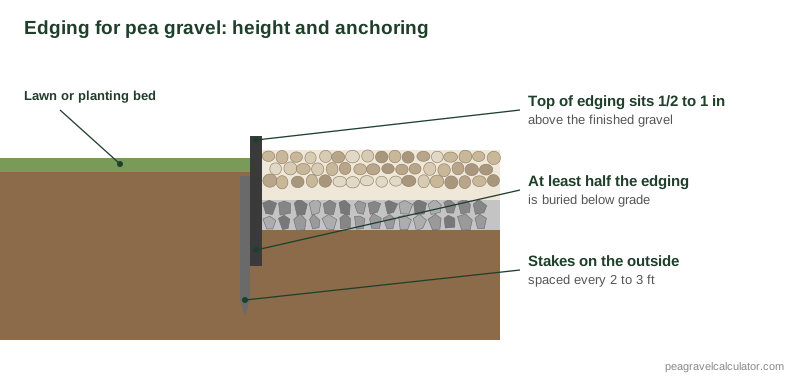
Two rules cover most cases. The top of the edging should stand 1/2 to 1 inch above the finished gravel surface. At least half the edging height should be below the surrounding grade, so the soil outside braces it. A 4-inch strip holding 3 inches of gravel therefore needs the gravel bed sunk slightly below lawn level, which is what excavation achieves anyway.
Keep the reveal modest beside lawns. An edge standing more than about an inch proud becomes a trip hazard and catches mower wheels.
How Much Edging to Buy
Edging is sold by length, so measure the perimeter of every side that is not already contained by a wall, a slab, or a building.
- Straight path: length × 2. A 3 × 40 ft path needs 80 linear feet. The ends usually meet a patio or lawn edge and may need another 3 feet each.
- Rectangular patio: 2 × (length + width), minus any side against the house. A 12 × 16 ft patio with one long side against a wall needs 12 + 12 + 16 = 40 linear feet.
- Circular area: 3.14 × diameter. A 10-foot circle around a fire pit needs 31.4 linear feet.
- Curved bed: lay a garden hose along the line, mark the ends, and measure the hose.
Add 5 to 10 percent for overlaps at joints and for cutting waste. Metal edging usually comes in 8 or 10 foot lengths with stakes included, so round up to whole pieces.
For the gravel itself, the pea gravel calculator handles rectangles, circles, and triangles.
How to Install Edging for Pea Gravel
- Mark the line. Use string and stakes for straight runs and a hose or marking paint for curves.
- Cut a trench. A flat spade or half-moon edger cuts a narrow slot along the line, deep enough to bury at least half the edging.
- Set the edging. Place the strip against the outer wall of the trench. Check the top against a level or a string line so it follows the grade evenly.
- Stake it. Drive stakes every 2 to 3 feet on straight runs and closer on curves. Stakes go on the outside, away from the gravel, unless the product is designed otherwise.
- Join sections. Overlap or use the connectors supplied. A gap at a joint is where gravel escapes first.
- Backfill and compact. Pack soil against the outside face. Loose backfill lets the edging lean outward once the gravel pushes on it.
- Add base, fabric, and gravel. Run the landscape fabric up the inside face of the edging by an inch so stones cannot slip underneath. The installation guide covers the remaining steps.
Install edging before the base goes in, not after. Trenching beside a finished gravel surface mixes soil into the stone.
Curves, Slopes and Lawn Edges
Curves. Aluminum and thinner steel bend by hand around a form such as a bucket or a stake. Tighter curves need more stakes, roughly every 12 to 18 inches, or the strip springs back toward straight.
Slopes. Edging alone does not stop gravel moving downhill. On anything steeper than a gentle grade, add cross timbers or stone steps to break the slope into level sections, or use a stabilizer grid. See how to keep pea gravel in place for slope methods.
Next to a lawn. A single course of brick or pavers laid flat outside the metal edging gives mower wheels a track and stops the trimmer from throwing stones. It adds cost but removes the most common maintenance complaint.
Next to a driveway or road. Vehicle tires push sideways with far more force than feet do. Use a concrete, stone, or heavy timber curb here. Thin strip edging will bend.
Edging Mistakes That Let Gravel Escape
- Edging set level with the gravel. Stones roll over the top. Leave a 1/2 to 1 inch reveal.
- Too few stakes. The strip bows outward between supports. Stake every 2 to 3 feet.
- Edging too short for the depth. A 3-inch strip cannot hold 3 inches of gravel and still be anchored.
- Gaps in brick or stone borders. Any gap wider than the stone size leaks. Butt pieces tight or back them with a metal strip.
- No edging at transitions. Where gravel meets a paved surface, a low threshold strip keeps stones off the paving.
Maintenance
Walk the edge each spring. Frost can lift stakes and tilt sections, and a few minutes with a mallet resets them. Rake gravel back from the border toward the center, since traffic moves it outward over time. If the gravel has risen to the top of the edging, the bed is overfilled or the edging has sunk. Rake out the excess rather than adding height. The maintenance guide has a seasonal checklist.
Frequently Asked Questions
Do you need edging for pea gravel?
What is the best edging for pea gravel?
How high should edging be above pea gravel?
How deep should edging be buried?
How much does pea gravel edging cost?
How much edging do I need for a pea gravel patio?
Is plastic edging good enough for pea gravel?
Can I use bricks as edging for pea gravel?
Should edging go in before or after the gravel?
How far apart should edging stakes be?
Does steel edging rust?
Will edging stop pea gravel moving on a slope?
What edging works best beside a lawn?
Related Calculators and Guides
Keep Pea Gravel in Place
Seven containment methods, including grids and resin for slopes.
GuideHow to Install Pea Gravel
Excavation, base, fabric, and spreading, step by step.
GuideWalkway Guide
Path widths, depth by traffic, and curved path layout.
GuidePatio Guide
Depth, base specification, and furniture tips.
CalculatorCost Calculator
Total material cost from your dimensions and local price.
GuideWhat Goes Under Pea Gravel
Base stone and fabric, and how they meet the edging.
Sources & Methodology
- USGS: Aggregates Statistics and Information: reference data for construction sand and gravel
Price ranges are typical 2026 US retail material prices gathered from published landscape cost guides and retailer listings. They are not quotes, and heavy-gauge or specialty products cost more. Height, reveal, and stake spacing reflect common installation practice and manufacturer instructions, which take priority for any specific product. Perimeter formulas are standard geometry.
Last reviewed: October 6, 2026 · Full methodology